Heat Pump Quote — Corvée
Corvée Property Services
Heat Pump Quote
About you
Are you a homeowner or a landlord?
Your heating system
What does your current heating system use?
i How to find out
Your heating system
What type of electric heating system do you have?
Your boiler
What type of boiler do you have?
Your boiler
Do you have room for a water cylinder?
Heat pumps can't produce immediate hot water on demand. Instead, they heat water over time, which is stored in a cylinder ready for when you need it.
i Show me an example
Your boiler
How quickly does your water come out of your cold tap?
Your boiler
Roughly how old is your boiler?
Your home
How many bedrooms do you have?
Your home
How many bathtubs do you have, or plan to have in the future?
Not whole bathrooms — just tubs. This includes tubs with showers over them.
Your home
How many separate showers do you have, or plan to have?
Only count shower cubicles — not showers over a bathtub.
Your home
How many radiators do you have?
On the day of installation, some radiators may need replacing.
i Why we replace radiators
Your home
Do you have enough ground space for an outdoor unit?
This unit is roughly the size of a large suitcase — 110cm × 80cm × 45cm.
i Show me an example
Your EPC
Do you have an Energy Performance Certificate (EPC)?
An EPC is required to install a heat pump. It gives a property an energy efficiency rating from A (most efficient) to G (least efficient).
i Help me find my EPC
Energy usage
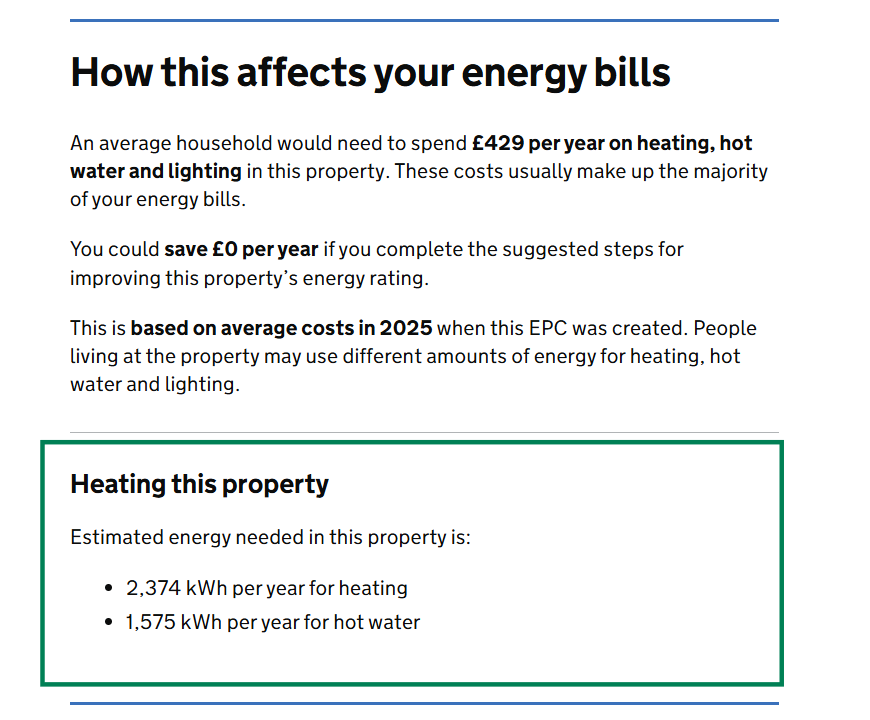
How many kWh do you use heating your home annually?
You'll find this under "Heating this property" on your EPC.
i Where on my EPC
Energy usage
How many kWh do you use for hot water annually?
You'll find this under "Hot water" on your EPC.
i Where on my EPC
Your home
Which of these best describes your home?
Your home
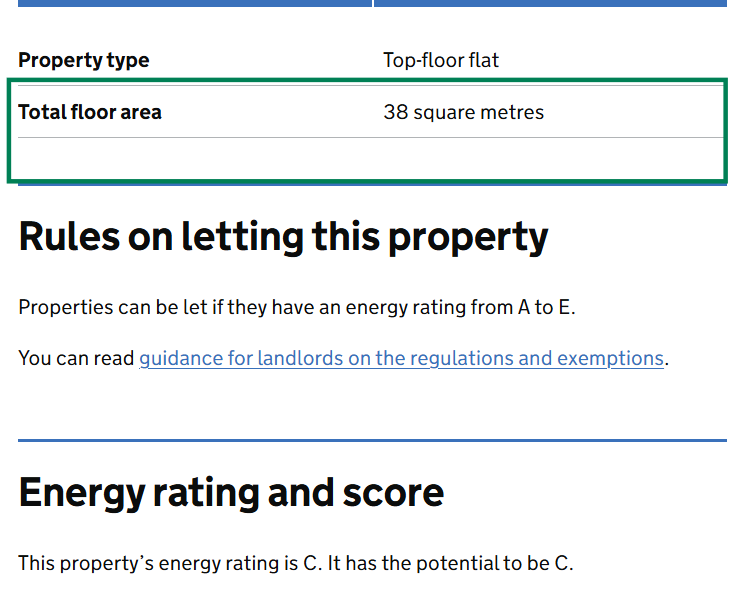
What size is your home in square metres?
You'll find this under "Total floor area" on your EPC.
i Where on my EPC
Your home
Roughly, when was your house built?
If your house has been modernised to a newer standard, please select the relevant option.
i Help me find out
Almost done
Which payment option best suits you?
Almost done
The installation postcode
Please enter the postcode of the property where we'll be installing your new heat pump.
Almost there
What's your first name?
Almost there
And your last name?
Almost there
What's your email address?
We'll send your quote confirmation here.
Last one
And your phone number?
So our team can call you with your personalised quote.
Quote request received
Thanks — one of our heat pump specialists will review your details and be in touch within 1 business day.
Callback request
What's your first name?
Callback request
And your last name?
Callback request
What's your email address?
Last one
And your phone number?
Our team will call you as soon as possible.
We'll be in touch soon
Thanks — one of our specialists will review your details and be in touch as soon as possible.
Your heating system
We need some extra information
Based on what you told us, it'll be easier to talk you through your new installation over the phone, or over live chat.
Request a callback
Our office hours are Mon–Fri 8am–8pm, Sat & Sun 9am–3pm. We aim to call within 1 hour.
Chat to us
Chat instantly with one of our experts.
A couple of options
You have a couple of options
Heat pumps
Unfortunately we can't install a heat pump
If you selected the wrong answer you can reset and start again.
No room for water cylinder.
Gas boilers  Installed tomorrow
Choose a new A-rated boiler instead?
No hassle, no committment, just a fixed, fair-price quote for your full installation. 0% APR finance options available.
Get a fixed quote
A couple of options
You have a couple of options
Heat pumps
We'll need to come visit to take measurements for the heat loss calculation
While we are there, we can talk you through the entire process and answer any questions before you receive a quote.
Book a visit
Gas boilers  Installed tomorrow
Choose a new A-rated boiler instead?
No hassle, no committment, just a fixed, fair-price quote for your full installation. 0% APR finance options available.
Get a fixed quote
Identifying your fuel type

The fuel type is often written on the front of the heating system.

Most boilers are supplied with gas. If you have a gas meter, gas cooker or gas fire it is likely to be a gas boiler. If you have gas bottles or an LPG storage tank outside then it is LPG.

If you're still unsure, give us a ring on 01536 680920.

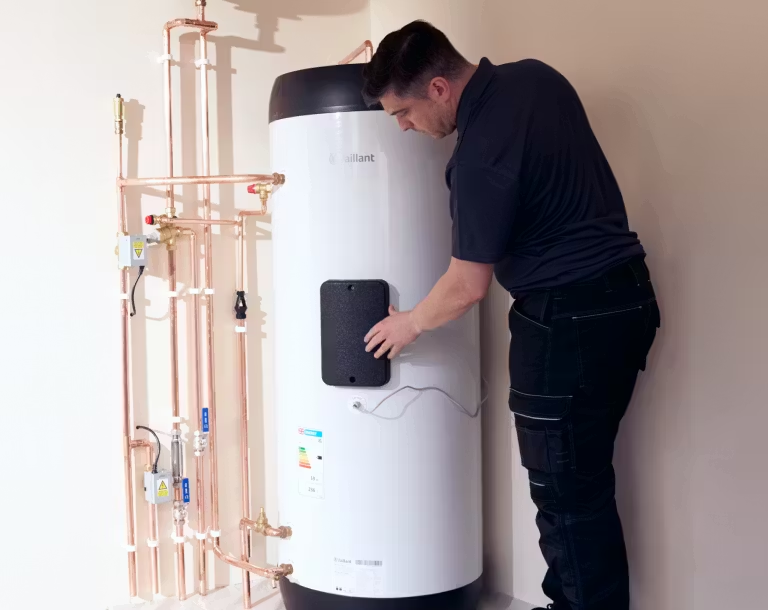
Hot water cylinder example

As part of your heat pump installation, we'll also need to install a hot water cylinder.

Airing cupboards are one of the most popular choices, along with loft spaces and garages.

No matter which location you choose, you'll need approximately 2 square metres of floor space and 2 metres of height to allow for pipe fittings.

Hot water cylinder example
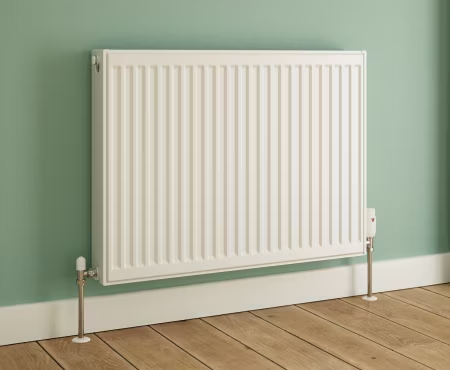
Why we replace radiators

Heat pumps work differently from a traditional gas boiler as they typically heat water to a lower temperature than a boiler would, which means less energy is used. However, this does tend to mean that larger radiators are required to ensure the home can still be heated sufficiently with the lower flow temperature.

  1. On the day of installation, your engineer will assess each radiator.
  2. You will be informed which radiators will need replacing, if any.
  3. New energy efficient radiators will arrive the next day.
  4. Up to 60% of your radiators can be upgraded at no extra cost, if we identify that some of your radiators are undersized.
Radiator example
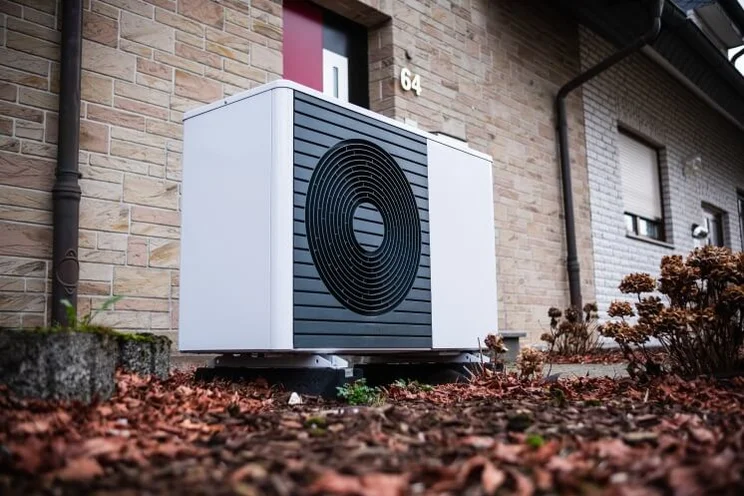
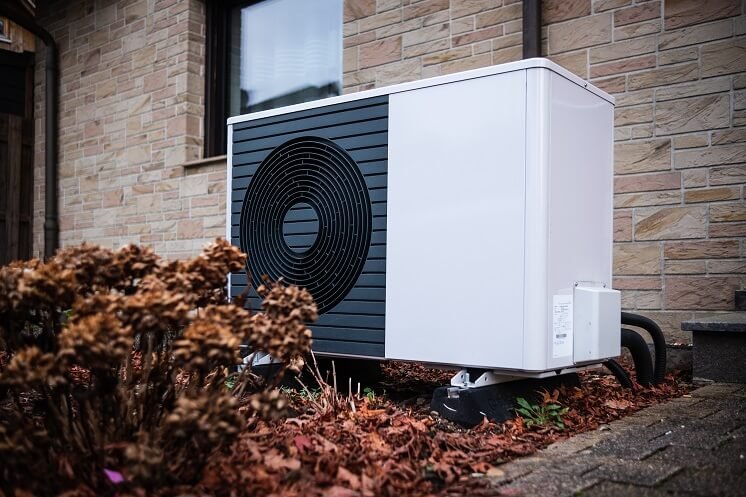
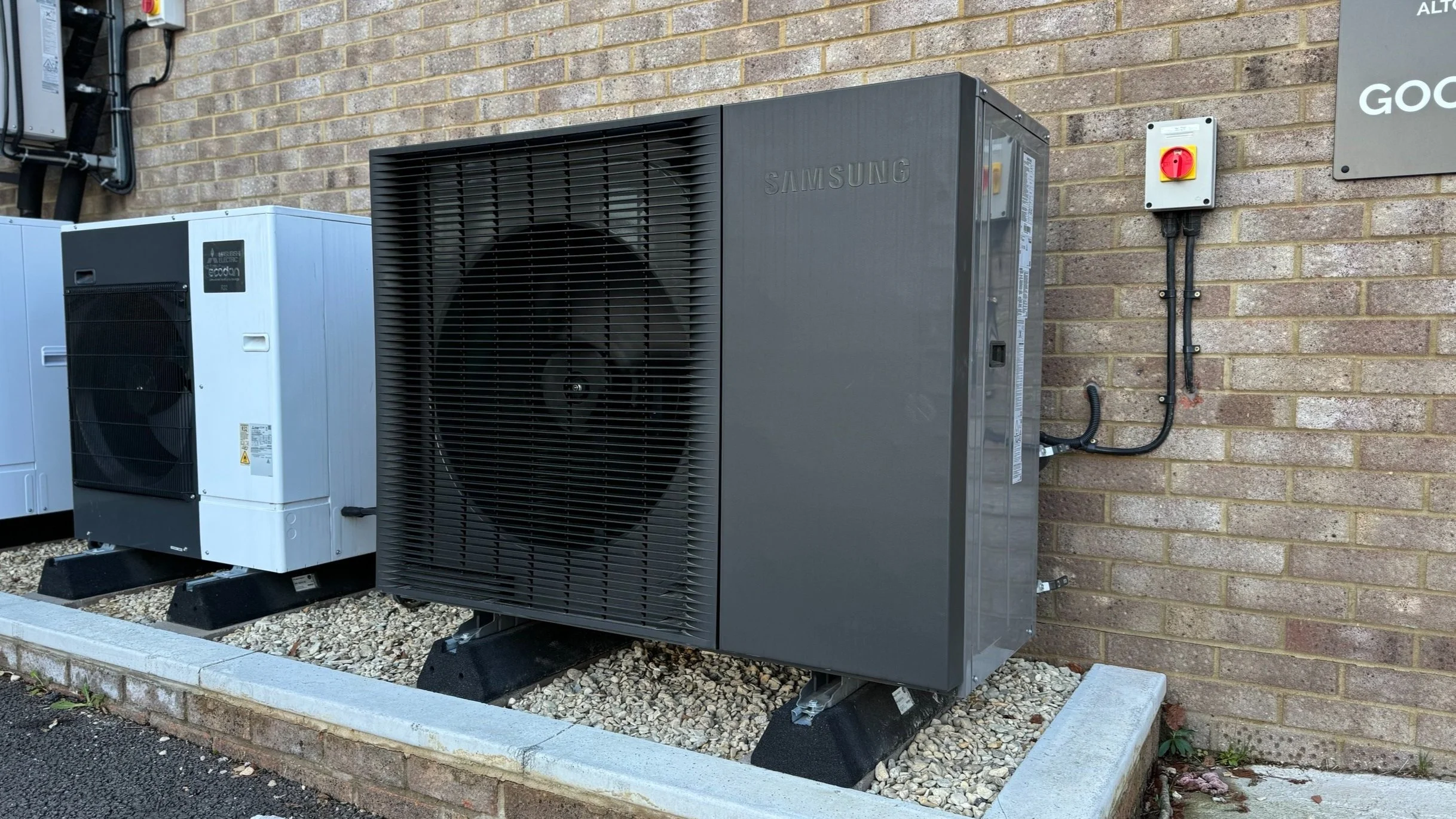
Outdoor unit example

The outdoor unit is the part of the heat pump system that extracts heat from the air outside to transfer inside your home. It's an essential part of the system, and so it's really important that there's enough space outside your home for it to be installed correctly and compliantly.

This unit is roughly the size of a large suitcase (110cm x 80cm x 45cm). It also requires at least 100cm around it to be able to effectively extract heat from the air.

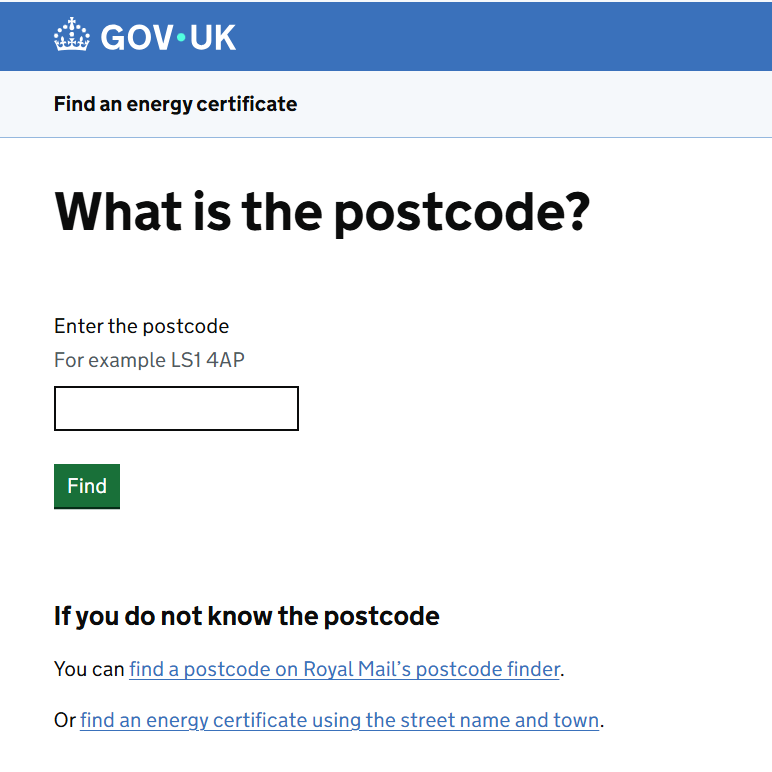
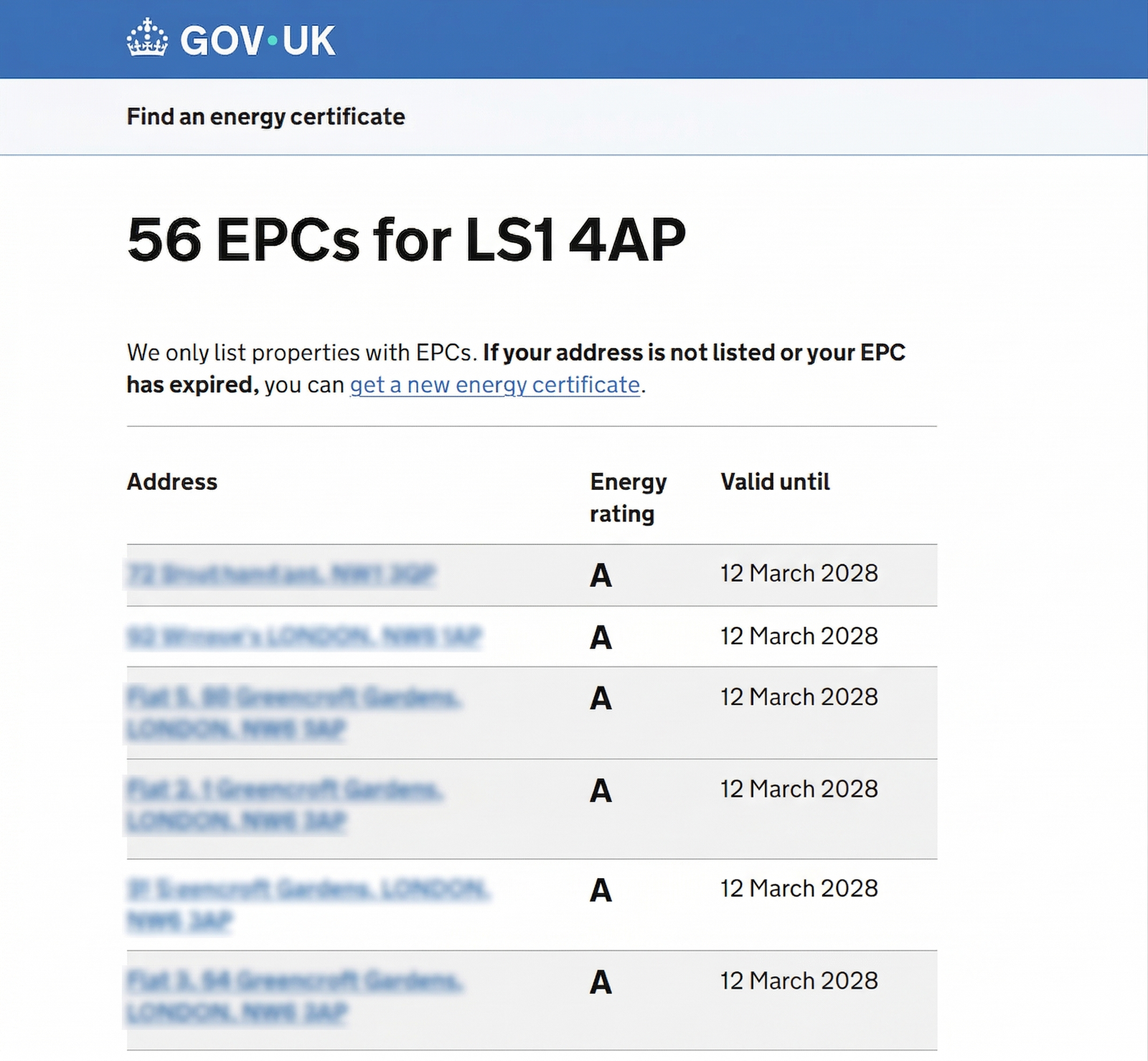
Finding your Energy Performance Certificate

If you've recently bought your home then it will have a valid EPC as it's a requirement when selling a property. However, they last for 10 years so even if you've been there for a while you may still have one. It's really easy to check, just follow the steps below.

  1. Visit the GOV.UK website by using the Find your EPC button.
  2. Enter your postcode.
  3. Select your address from the list.
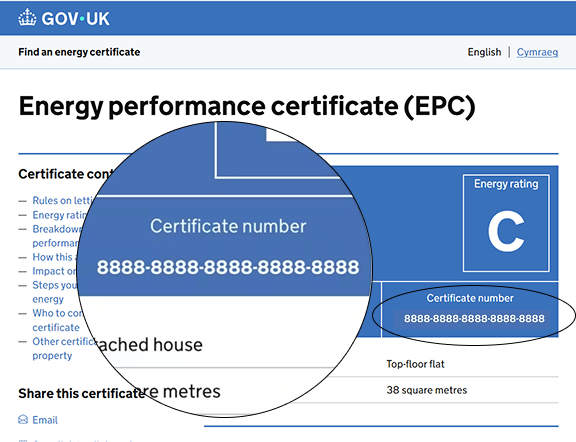
  4. The certificate number has 20 characters and is in the blue box.
  5. Highlight and copy the number.
  6. Come back and paste the number.
Find my EPC →
Finding "Heating this property"

We'll guide you to where you can find this information.

  1. Scroll down to the section How this affects your energy bills.
  2. Within this section you'll see a sub heading Heating this property.
  3. Locate the number in kWh for heating.
  4. Highlight and copy the number.
  5. Come back and paste the number.
Find my EPC →
kWh on EPC
Finding "Heating this property"

We'll guide you to where you can find this information.

  1. Scroll down to the section How this affects your energy bills.
  2. Within this section you'll see a sub heading Heating this property.
  3. Locate the number in kWh for hot water.
  4. Highlight and copy the number.
  5. Come back and paste the number.
Find my EPC →
kWh on EPC
Finding "Total floor area"

We'll guide you to where you can find this information.

  1. Your "Total floor area" is in the left corner of the blue box.
  2. Highlight and copy the number.
  3. Come back and paste the number.
Find my EPC →
Total floor area on EPC
Identifying when your home was built

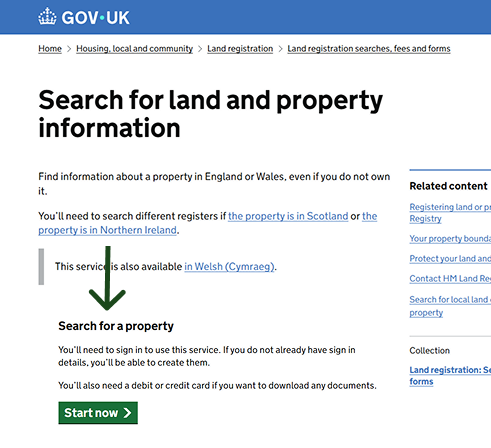
The easiest way to find out when your home was built is to look at its "title register". These are more commonly known as the "title deeds". The title deeds are proof of ownership of the property, but they also tell you when the property was sold to the first owner by the property developer. If you are the current owner, your conveyancer should have sent you the title deeds after the sale was completed. HM Land Registry will allow you to purchase your title register for £3.

  1. Visit the GOV.UK website by using the Find your title deeds button.
  2. Enter your postcode.
  3. Select your address from the list.
  4. Select the "View available documents" button.
  5. You will then need to create an account and follow the instructions.
Find my title deeds →
Find your title deed