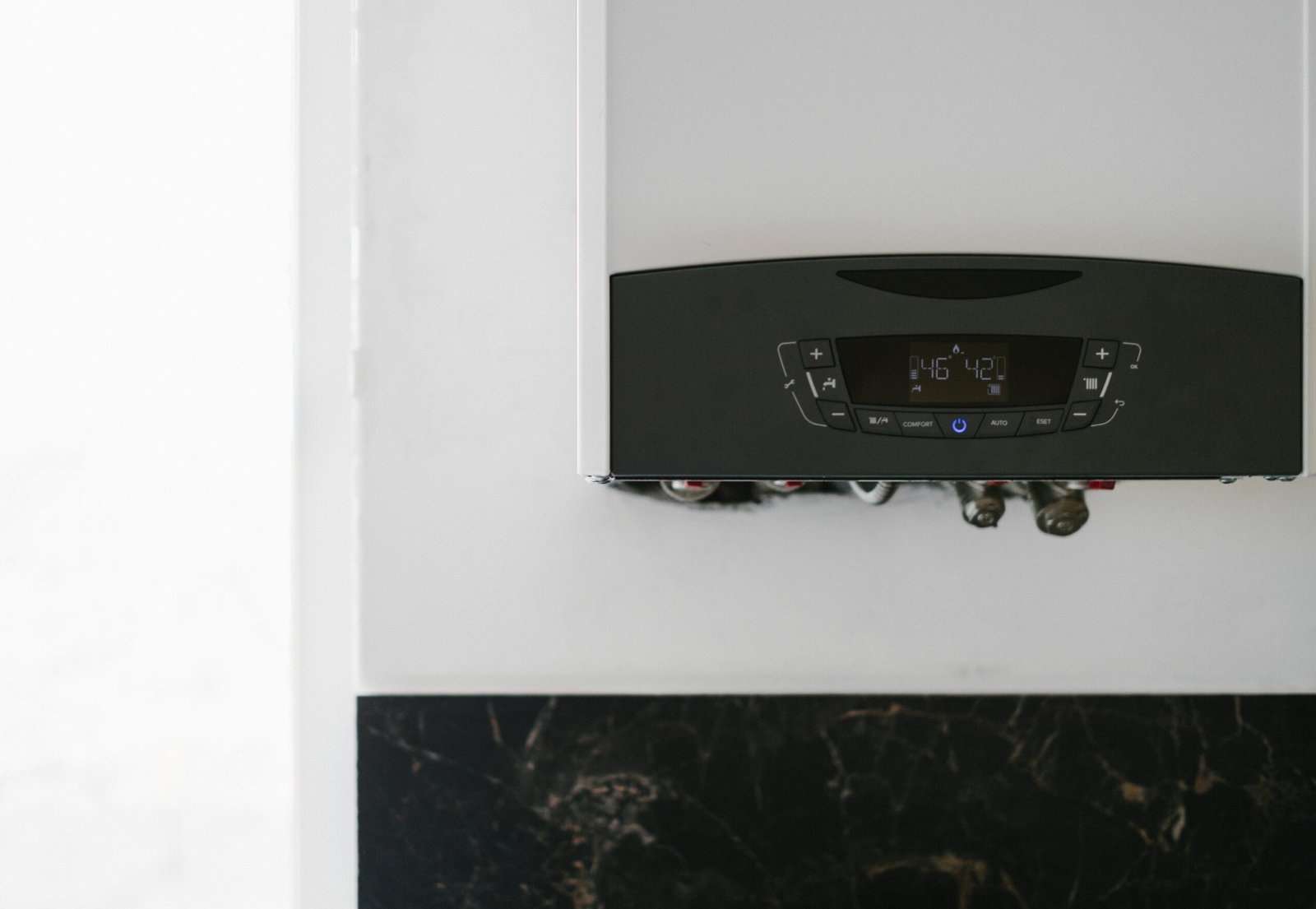
Is it time to replace your boiler? Read our complete 2026 guide to choosing between combi, system, and regular boilers. Learn how to size your new boiler correctly and what to expect during a professional Gas Safe installation in Northamptonshire.
Replacing a boiler isn’t just “swapping like-for-like”. Picking the right type (combi, system or regular/heat-only), sizing it correctly in kW and hot water flow, and planning the install with a Gas Safe engineer makes all the difference to comfort, running costs and reliability. In this up-to-date 2026 guide, we’ll help you to:
- Compare combi vs system vs regular and know which suits your home.
- Work out the power and hot water flow you actually need.
- Spot when it’s time to replace your boiler.
- Understand Corvée’s installation process across Northamptonshire.
- Get quick answers to common questions and your next steps.
Book your home survey & boiler quote
Boiler types – and who each one is for
Combi (combined: heating + instant hot water, no tanks)
Benefits:
- Saves space: no loft tanks or hot water cylinders.
- Instant domestic hot water on demand.
- Simple to install in many modern homes.
Limitations:
- If you’ve got 2–3 bathrooms running at the same time, flow may not keep up.
- Flow depends on boiler performance and your mains pressure/flow.
Best for:
- Flats and houses with one main bathroom (plus cloakroom).
- Households that don’t use multiple showers at once.
- Homes short on space or without a dedicated plant/airing cupboard.
System (with a pressurised hot water cylinder)
Benefits:
- Supplies multiple bathrooms at the same time with strong, stable flow and temperature.
- No loft tank (unlike a regular system): it’s a sealed setup.
Limitations:
- Needs space for the hot water cylinder (airing cupboard/utility).
- Installation is a bit more involved than a combi.
Best for:
- Homes with 2–3 bathrooms used at the same time.
- Larger families with higher hot water demand.
Regular/Heat-only (traditional boiler with loft tank and hot water cylinder)
Benefits:
- Compatible with older/larger radiator systems, existing pumps and legacy controls.
- Ideal where tanks and pipework already suit this layout.
Limitations:
- Takes up more space (loft tank + hot water cylinder).
- Lower efficiency unless the overall system is upgraded properly.
Best for:
- Older properties where keeping the classic layout makes sense.
- Phased renovations when you’re not changing the whole system yet.
Not sure whether combi or system is best?
How to size your boiler (without overdoing the kW)
Get the sizing right and you avoid two headaches: being undersized (poor comfort) and being oversized (higher bills, “short cycling”, and reduced lifespan). Here’s what matters most:
Number of bathrooms & hot water demand
Rules of thumb:
- 1 bathroom and no simultaneous showers: a combi is often ideal (e.g. 24–30 kW depending on flow).
- 2 bathrooms used at the same time: consider a system boiler with cylinder.
- 3 bathrooms or more: higher-capacity system or a tailored solution.
Combi flow rate (l/min at ΔT 35 °C):
- Flow rate matters as much as kW. Around 10–13 l/min = a comfortable single shower.
- 14–16 l/min = better for more powerful showers; still limited for true multi-shower use.
Mains pressure and flow:
- If the mains is poor, a 40 kW combi won’t fix it. We’ll test your real pressure and flow first.
Home size & radiators (heating)
- Radiators and insulation set the heating demand.
- Many UK homes heat fine on 12–18 kW; the 24–30 kW on combis is mainly for hot water, not heating.
- Don’t fixate on “more kW is better”: we set power and curves to maximise efficiency.
Insulation & real-world demand
- Windows, walls, roof and draughts affect demand more than you think.
- In well-insulated homes, an oversized boiler just wastes energy.
Heating controls & thermostats
- A modulating thermostat and TRVs (thermostatic radiator valves) cut bills and improve comfort.
- Smart zoning and schedules help avoid needless peaks and wasted energy.
Want us to measure your mains flow and size it properly?
10 signs it’s time to replace your boiler
- 10–12+ years in service (or warranty expired).
- Recurring faults (ignition issues, sensors, pumps, PCB troubles).
- Higher gas bills despite regular servicing and sensible use.
- Odd noises (banging, kettling, humming).
- Frequent pressure loss (with no obvious leaks).
- Smell of fumes/combustion issues or poor flue performance (a CO alarm is essential).
- Inconsistent hot water (temperature dips, slow to heat).
- Parts hard to source/obsolete (long lead times and high cost).
- Non-compliant setup (flue/ventilation/positioning problems).
- Renovations: out of space or big changes in how you use the home.
If you spot 2–3 of these, a technical survey will confirm whether repair still makes sense or replacement is the smarter move. At Corvée, you’ll get straight, honest advice.
Brands & warranties: what to prioritise
Proven standards
- Well-known brands (e.g. Worcester Bosch, Vaillant, Ideal) mean good parts availability, support and solid warranties.
- Correct installation and Gas Safe servicing matter just as much as the badge.
Extended warranties & aftercare
- 7–10–12 year warranties are available on certain models/setups (installed by accredited companies, with filters and annual service).
- Make sure we register your boiler with the manufacturer and keep the paperwork safe.
Controls & efficiency
- Smart thermostats, OpenTherm/Bus and weather compensation can lift comfort and cut bills.
- The right control strategy can save more than simply “going up a size”.
Check brands, warranties and control options
The Corvée installation process (Gas Safe engineers)
Technical survey & fixed quote
- We measure mains flow/pressure, check radiators and controls, and confirm positioning and ventilation/flue routes.
- We propose the right options (combi/system/regular), brands, warranties and useful add-ons (magnetic filter, system filter, surge protection, controls).
Installation (often in one day)
- Safe removal and disposal of your old boiler.
- New boiler fitted, connections made, system bled and tested.
- Flue/ventilation upgrades where needed.
- System clean (powerflush) if required and filters fitted.
Commissioning & documentation
- Combustion and safety checks (Gas Safe).
- Manufacturer registration for your warranty.
- Handover: controls explained and user guidance.
First-year service & maintenance plan (Membership)
- We’ll book your annual service and offer Corvée Care Membership to keep your warranty valid and give you priority support.
Timing & disruption
- Many like-for-like swaps complete in a day. Conversions (e.g. regular to combi and removing tanks), repositions or loft work can take longer.
- We protect floors, minimise disruption and leave everything tidy.
Book your survey & boiler quote
Alternatives & the future: controls, efficiency and renewables
Upgrades worth doing
- Magnetic filter/system filter: protect the boiler from sludge and extend lifespan.
- Powerflush (where appropriate): clean the system and boost performance.
- TRVs and smart thermostats: per-room comfort and meaningful savings.
- Insulation (where needed): windows, loft and draught-proofing.
What about heat pumps?
- For well-insulated homes with suitable emitters, a heat pump can be a great option.
- Corvée also installs renewables (MCS-accredited). For a straight, unbiased assessment, see /renewables or /contact-us.
New boiler or consider renewables? We’ll help you decide
FAQs
Why Corvée
- Serving Northamptonshire since 1983.
- Gas Safe Registered, APHC, Which? Trusted Trader, MCS.
- 4.7/5 from 124 reviews: fast response, tidy and professional.